
For those who just want the punchline, here it is: I spent seven days doing exactly what I was told to market my art organically on Instagram. I sold nothing and gained a handful of followers, mostly other artists doing the same challenge. I learned some useful things, but the biggest lesson was how I found this challenge in the first place.
They were running paid Instagram ads.
And there’s your punchline: paid ads to teach me how to get organic reach. Ba-dum-tss.
I went in looking for the secret to Instagram and accidentally got a much better lesson in marketing.
That doesn’t mean the challenge wasn’t good. It was, and I learned a lot from it. But I learned even more from the funnel itself. I knew going in that the $10 challenge would eventually lead to a pitch. What I didn’t realize until about halfway through was, holy shit, I paid her $10 to market herself to me. Every example was useful, but every example was also basically a mini ad for one of her businesses. I was learning how to market while watching someone very cleverly market to me.
If you’re here because you’re another artist wondering what we actually did for seven days and what worked, I’ve put my seven daily takeaways at the bottom. If you’re interested in the business and marketing behind it, this is where it got interesting.
But Does This Actually Work for Fine Art?
I’ve taken a lot of marketing courses over the years, and they tend to teach some version of the same thing: find your ideal customer, tell your story, get people’s emails with—wait for it—a FREEBIE, or as they call it, a lead magnet.
What am I supposed to give away exactly? A free oil painting or how about a free print? Well, I’ve done both those things and not once did any of it turn into a sale. In the end, it just cost me money.
And this is where the standard marketing tactic doesn’t seem to line up with what I’m actually selling. Original art is a luxury item. When was the last time someone gave you a free Porsche hoping you’d come back and buy one?
I’m not trying to build the biggest email list I can. I’m trying to find people who actually want to buy original art.
So when this $10 Instagram challenge showed up, part of me thought, maybe I’m doing it wrong.
I Made the Posts. Nobody Bought Anything.
By about day four, I was getting fed up with trying to make the prompts work for me without sounding like I was trying to make Instagram “content”.
One prompt was a “five things” post. I tried two versions, one of chatting while painting, another of five things I’d tell my younger artist self, and all I could think was, who the fuck is going to care about this? It felt far too Instagrammy, for lack of a better word.
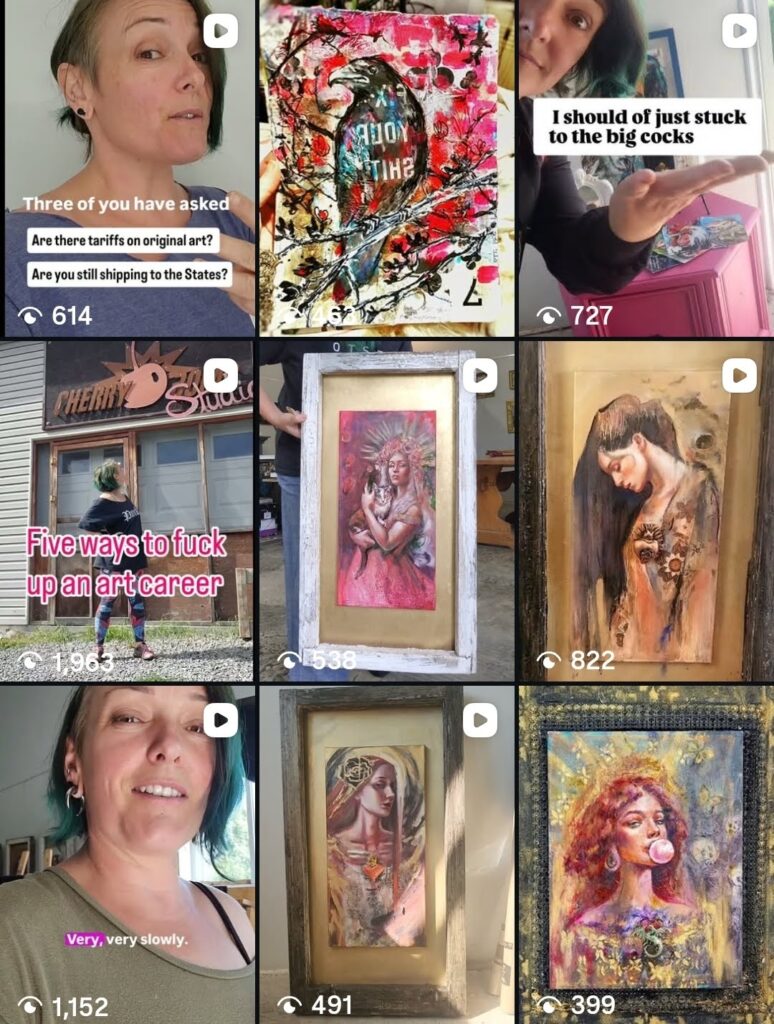
Then I saw one of her examples with no talking at all, so I made Five Ways to Fuck Up an Art Career instead. It was tongue-in-cheek, showed my paintings and actually sounded like me.
That was probably the first useful lesson: the format wasn’t necessarily the problem. Trying to make myself fit the format was.
The following day pretty much reiterated that. I was still trying to figure out how to make the prompt work for fine art, but now I had another problem: why would anyone stop and care? I could talk for 30 or 60 seconds because that’s what the prompt said, but that didn’t give anyone a reason to actually watch it.
So I stopped trying quite so hard to be good at Instagram, which is more or less how I ended up talking about cocks.
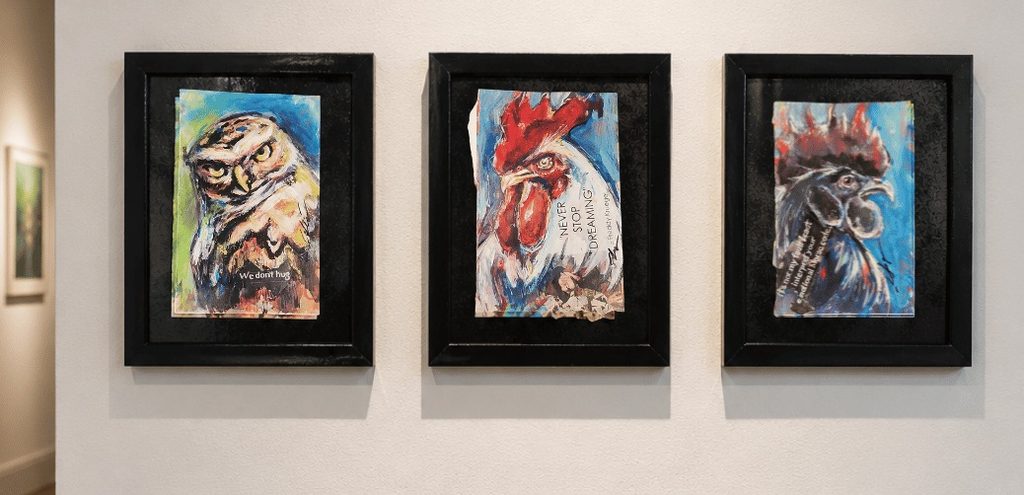
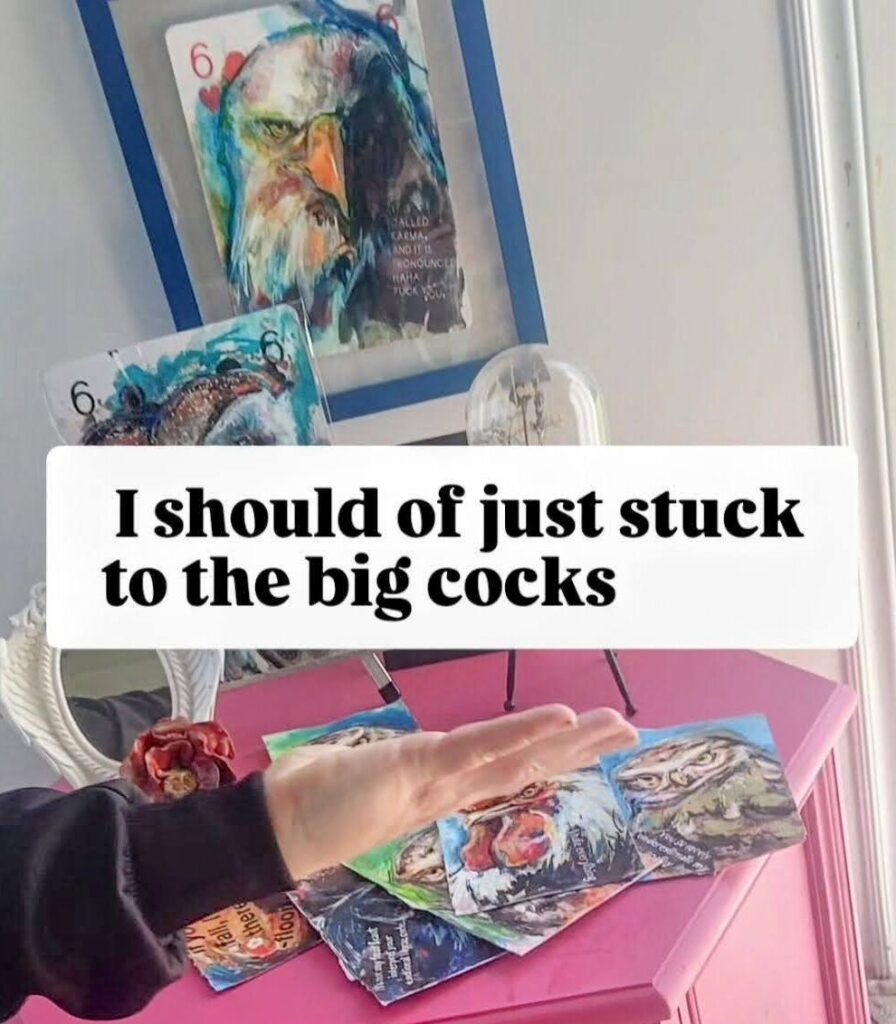
I used my Sassy Birds, talked about how the cock market had collapsed, swore a lot and generally did the prompt my way. You can see that particular bit of nonsense here.
Funny enough, that one actually produced something useful. Two people specifically reached out about the birds. One said she’d love to take one off my hands, so I sent her directly to Etsy.
She didn’t buy it.
But that was still useful information. Someone stopping to look, someone saying they want your art and someone actually buying it are very different things.
Getting seen isn’t the same as having a business.
And funny enough, by the end of the challenge, that was more or less the point the person running the challenge was making too.
The Best Lesson Was the Funnel
By the end of the seven days, I’d watched the whole thing unfold. I knew there was going to be a pitch. I understand how these low-ticket offers—or tripwire offers, as they’ve been called—work. Get someone to buy something small first, get them on your email list, give them something useful, and it’s a hell of a lot easier to sell to someone who’s already bought from you than to a complete stranger.
So the $10 challenge itself wasn’t the surprise. Watching how she used those seven days to give us genuinely useful lessons while every example was also basically a mini commercial for the larger program she was about to sell us was.
By the time the larger program was offered, we already knew what she did, how she did it and why we might need it.
That might have been the best lesson I got from the entire challenge: watching the funnel unfold while I was standing inside it.
I paid her $10 to market to me.
Fucking brilliant.
She Built the Fucking Shovel
During a gold rush, you can dig for gold or you can sell the tools to everyone looking for it. The first millionaire wasn’t necessarily the person who struck gold. It was the person selling the shovels.
And I mean that entirely as a compliment to the ecosystem she’s built.
By the end of the challenge, the conversation had moved beyond getting attention on Instagram to what you’re actually going to sell once you have it. The larger program was about figuring out your customer, creating a product specifically for them, pricing it, launching it and, importantly, creating something they might buy from you again. It could be monthly, quarterly or even yearly, but the idea was to build something repeatable rather than constantly starting from zero.
And then there’s the really clever part: she owns the platform where you can build and sell that repeatable product. Think of it a little like having her own Etsy, except she’s also teaching you the business model you’re going to build on it.
That’s when the gold-rush thing clicked for me. She built the shovel.
That’s a good business. But it also made me realize why I kept struggling to make some of the advice fit. I’m not selling a repeatable product. I’m selling one-of-one original paintings.
Selling hundreds of prints or a recurring subscription is a different business model from finding one person willing to spend $1,000 on a painting. So does the same Instagram-to-product funnel work for fine art? I don’t know.
What I do know is I still have to find that one person.
And that brought me right back to Instagram.
The Part I Couldn’t Ignore: Paid Instagram Ads
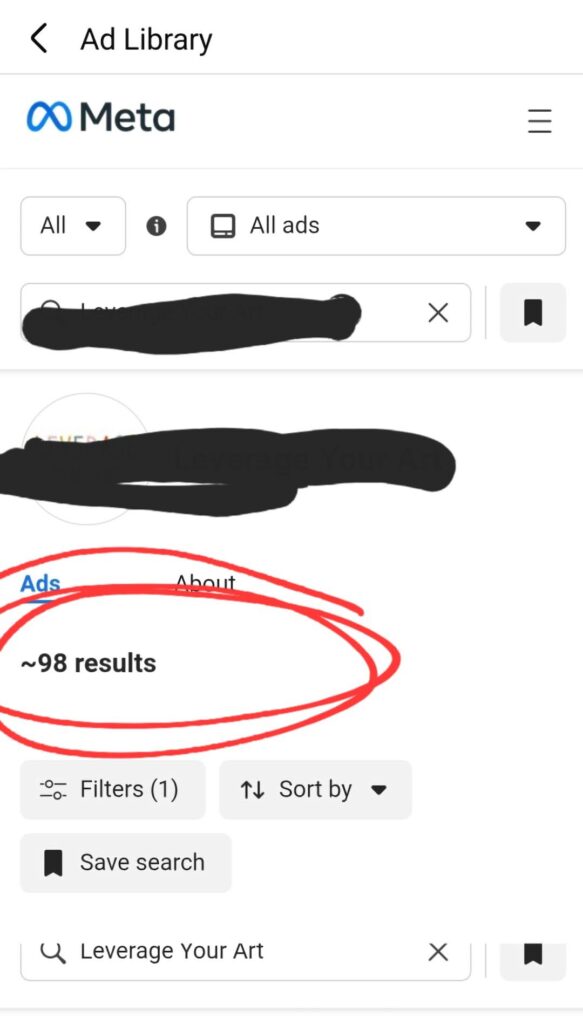
Every course being served to me this September came through a paid Instagram ad, including this one. I even checked the Meta Ad Library for the business behind this particular challenge, and at the time she was running 98 ads.
That’s not a criticism. I understand businesses advertise. It was more of an aha: I’d just spent seven days learning how to get organic attention on Instagram while the much more profitable business teaching me how to do it was actively spending money on ads. Ninety-eight of them, to be clear.
So maybe my next $1,400 would be better spent actually marketing my art instead of taking another marketing course.
I can fill out another ideal-customer worksheet and decide who I think buys my art, or I can start putting the work in front of people and see who actually does.
So, Is Instagram Worth It for Artists?
I still don’t know.
For me, Instagram is more of a storefront window. It lets people know I’m still alive, still painting and haven’t drunk myself into an artistic tizzy. I have my website, this blog, Google, Etsy, galleries and other places people can find me.
But maybe that’s my biggest takeaway from all these courses promising to teach us how to get better at Instagram: ask yourself how the hell you found them in the first place.
Because every business currently trying to sell me something made damn sure I found them.
They bought an ad. “Le sigh”.
The 7-Day Instagram Challenge: What I Tried and What I Actually Learned
For anyone who skipped down here because you just want to know what we actually did, here’s my version. I’m not reproducing the paid program; these are the things I tried and what I took from them.
Day 1 — Answer Something People Actually Ask
Instead of inventing content, start with questions people already ask about your work. Me it was how thw move was going.
My takeaway: This was easy because I already get questions about painting, pricing, materials and shipping to the US so currently tariffs. I don’t need to invent educational content. I can answer things people are already curious about.
Day 2 — Talk About the Money
I used the question of what it costs to make one of my paintings.
That quickly became more interesting than listing the price of a tube of oil paint. What does cost mean after decades of learning, studio expenses, frames, failed paintings and everything else required to make the one painting somebody eventually buys?
My takeaway: Price isn’t particularly interesting. Why something costs what it costs is. For original art, that includes history, labour, scarcity and provenance, not just materials. This of course got a lot of response from other artists so is that bad? Good?
Day 3 — Tell the Story Behind the Thing
This was where I used one of my antique Abbey windows. I exhibited at the Abbey for the Arts about 25 years ago. Those windows are now around 100 years old, and years later some ended up with me and became frames for my paintings.
My takeaway: This works beautifully for fine art because the story is part of the object. I don’t have to manufacture content when the painting already has history.
Day 4 — The Dreaded List
Five things. Five tips. Five whatever.
I tried. Jesus Christ, I tried.
Eventually I made Five Ways to Fuck Up an Art Career because that was something I could actually say without wanting to punch myself.
My takeaway:Turns out, the listicle format wasn’t the problem. The problem was me trying to sound like I thought Instagram wanted me to sound which was Hobby Lobby polite and clean.
Day 5 — Talk About Something That Didn’t Work
Hello, Sassy Birds. I talked about Cocks and Hooters because I was kind of over the polite curated INSTA thing.
They sold during COVID. I made more. Then they stopped selling.
My takeaway: This one gave me actual buying signals—two people specifically talked about wanting one—but still no sales. That’s considerably more useful to me than views. Interest isn’t purchase behaviour.
Day 6 — Make Them Feel Something
This was harder for me because fine art already is the thing that’s supposed to make you feel something. I don’t need to explain a painting until I’ve strangled whatever was interesting about it.
What did work was telling the atmosphere around the Sassy Birds: COVID, everybody trapped together, the world losing its frigging mind while everyone insisted on positivity. That’s where those sarcastic little assholes came from.
My takeaway: Don’t tell people what they’re supposed to feel about the painting. Tell them where it came from and let the work do the rest.
Day 7 — Show Up as Yourself
By the end, this was really the point I took from the whole thing. There wasn’t one perfect post. People in the challenge were getting wildly different results from the same assignments.
My takeaway: Try the formats and keep the ones that feel like you. Dump the ones that make you feel like you’re performing for the algorithm gods.
For me, that means keeping my grid current, the occasional Story or video when I actually have something to say, and considerably more time making the fucking art.